
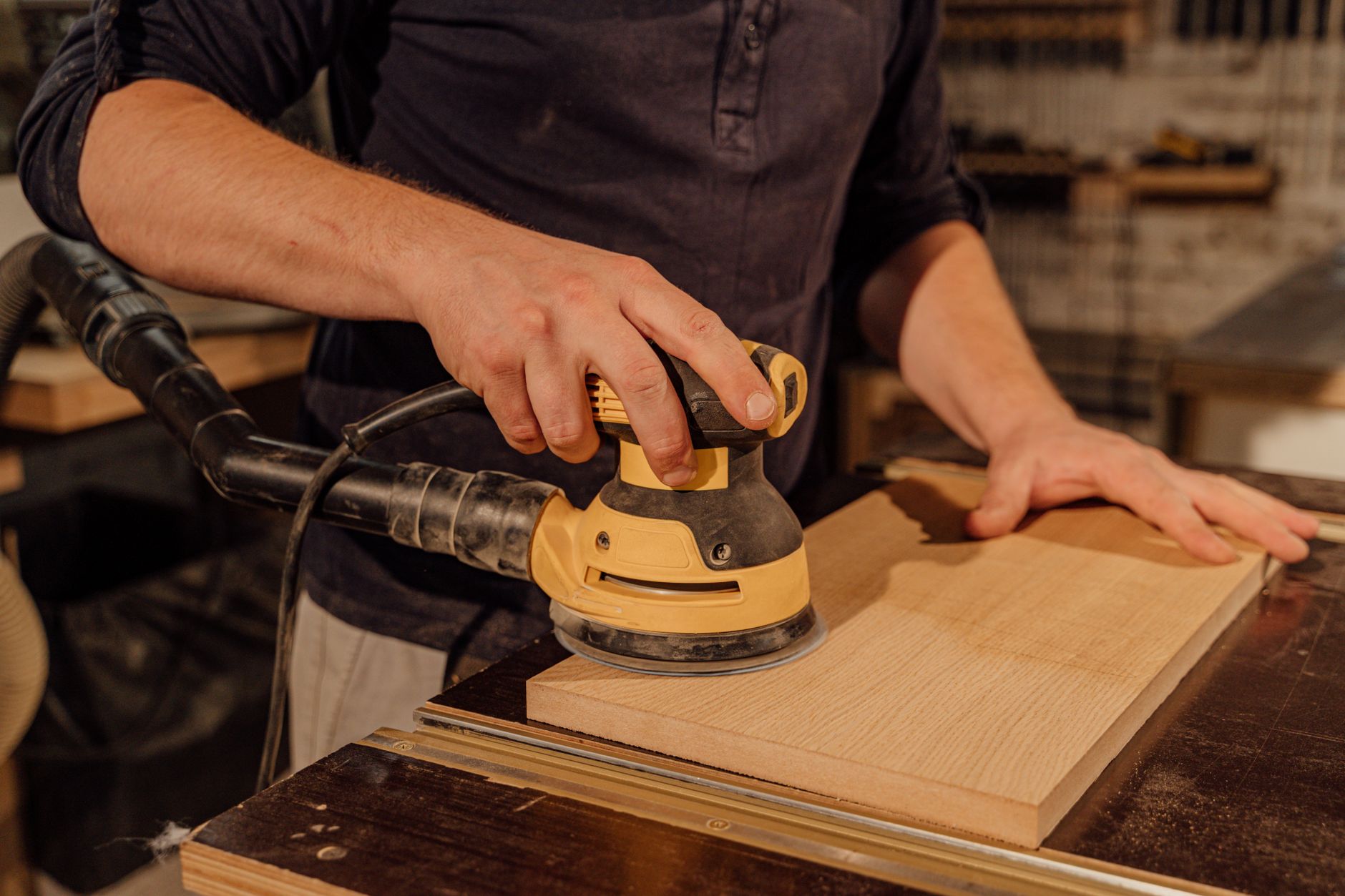
Finishing is where furniture quality is won or lost — and right now, most plants are gambling that outcome on how rested their operators are at the end of a shift. Cobots don't get tired, don't vary their grip pressure, and don't skip a pass on a Friday afternoon. For furniture manufacturers across Canada and the USA facing skilled labour shortages and relentless cost pressure, cobot sanding is no longer a futuristic idea. It's a production reality.
Why Manual Sanding Breaks Down at Scale
The problems with manual sanding are well documented but rarely quantified at the plant level. First, there's injury: shoulder impingement, carpal tunnel, and lower back strain are endemic in finishing departments, driving compensation claims and absenteeism. Second, there's inconsistency: two operators sanding the same chair back will deliver different surface profiles even following the same instruction sheet — a problem that compounds when you're running 500 units per shift. Third, there's waste: human operators instinctively apply variable force, which means abrasive belts and discs wear unevenly and get replaced more often than necessary. Studies in North American woodworking plants consistently show 20–35% overconsumption of abrasives compared to automated equivalents. Finally, there's turnover. Finishing is often the hardest position to staff and retain, and every departure costs 6–8 weeks of retraining before the replacement reaches acceptable quality output.
How Cobots Address Every Root Cause
A properly configured cobot sanding cell attacks all four problem areas simultaneously. Force-torque control at the end-effector maintains a consistent contact pressure — typically ±0.5 N — across the entire surface path regardless of surface contour. This is the key differentiator from fixed automation: the cobot actively compensates for part variation, not just repeats a fixed path. The result is uniform stock removal across every unit in the batch. Dust management is integrated at the tool: a shrouded end-effector connects directly to the shop dust extraction system, capturing the majority of particulate at source — reducing ambient dust levels and minimising PPE requirements for operators working nearby. Because the cobot operates safely around people without a cage (at collaborative speeds), it can be deployed in the same finishing area as human workers without a full cell redesign.
Camex's Sanding Cobot Lineup — Built for Furniture
Camex offers three purpose-configured sanding systems for the furniture and wood products sector. The ChairMate is engineered for complex curved profiles — chair backs, legs, seat rails, and arm contours — using a compliant sanding tools that follows compound curves without programming every point on the surface. The DoorMate is optimised for cabinet doors, drawer fronts, and flat panel surfaces, that requires zero programming and equipped with a high-throughput vacuum fixture that holds parts without clamps, enabling fast load-unload cycles. The SurfMate handles large, contoured panels, tabletops, and workpiece face where surface area is high and consistency is critical. All three systems use Doosan Robotics cobots paired with Camex-designed end-effectors and fixturing. In addition, custom designed systems are also offered if the pre-engineered solutions are not a fit.
Reduce Capital Risk: The Rental Option
Not every manufacturer is ready to make a full capital investment before validating automation in their own production environment. To provide greater flexibility, Camex Robotics offers the option to rent a complete cobot sanding system on a short-term basis. Each rental includes installation, commissioning, programming for your first part family, operator training, preventive maintenance, and unlimited remote support. This allows manufacturers to evaluate the system's performance, productivity gains, and return on investment under real production conditions before deciding whether to purchase the system. It is an ideal solution for companies with temporary production demands or those looking to minimize the financial risk of adopting automation for the first time.
If your finishing department is running on manual sanding today, the labour market alone is reason enough to start planning your transition. Camex serves furniture and wood products manufacturers across Quebec, Ontario, and the northeastern United States — with application engineers who have commissioned sanding systems on chairs, cabinets, doors, panels, and custom millwork. Contact us for a free, no-obligation sanding application assessment.
Learn more about specs, configurations, and how to get started with this system.