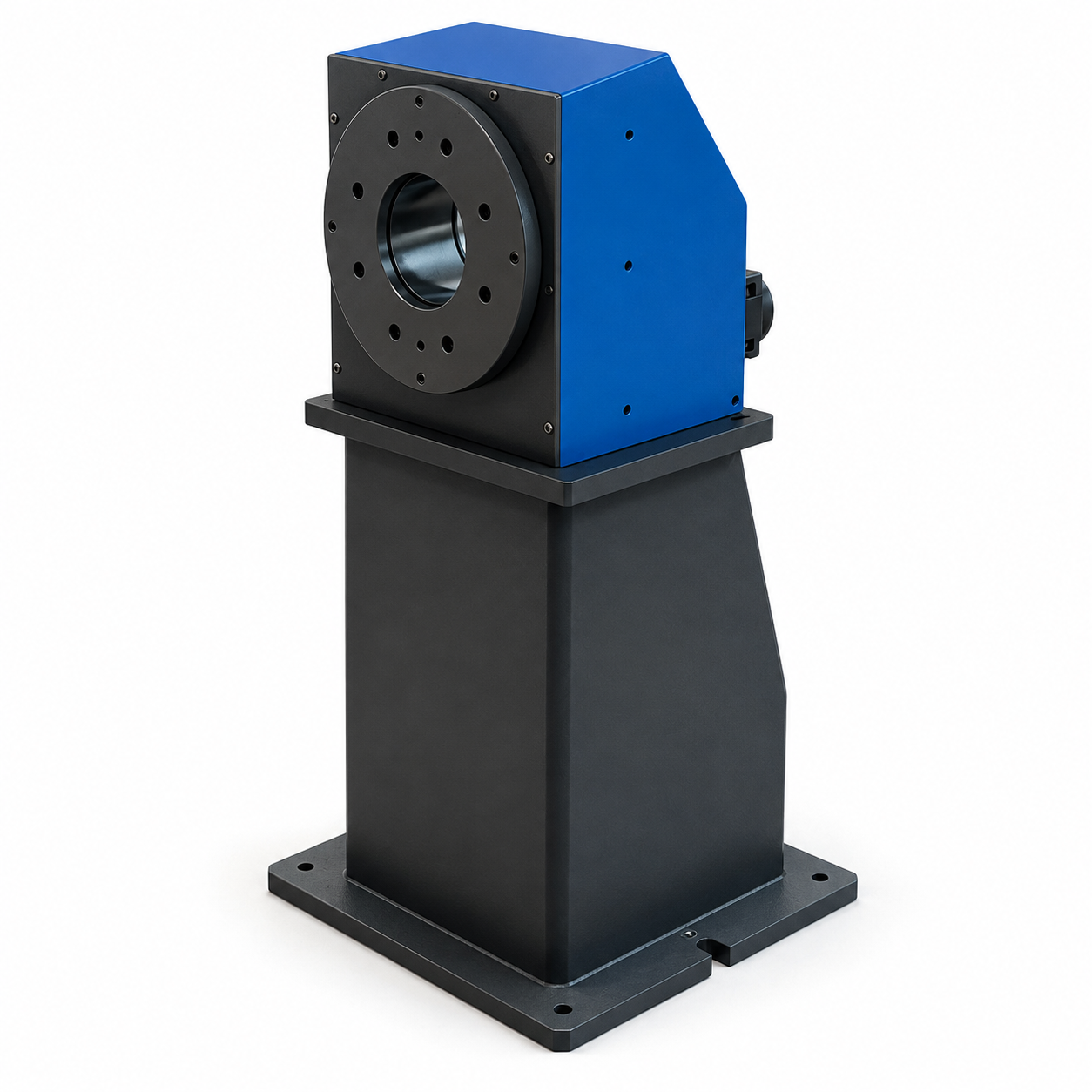
Single-Axis Rotary Positioners
Rotate the workpiece to present weld joints at the optimal angle. Reduce out-of-position welding and improve bead quality on multi-sided assemblies.
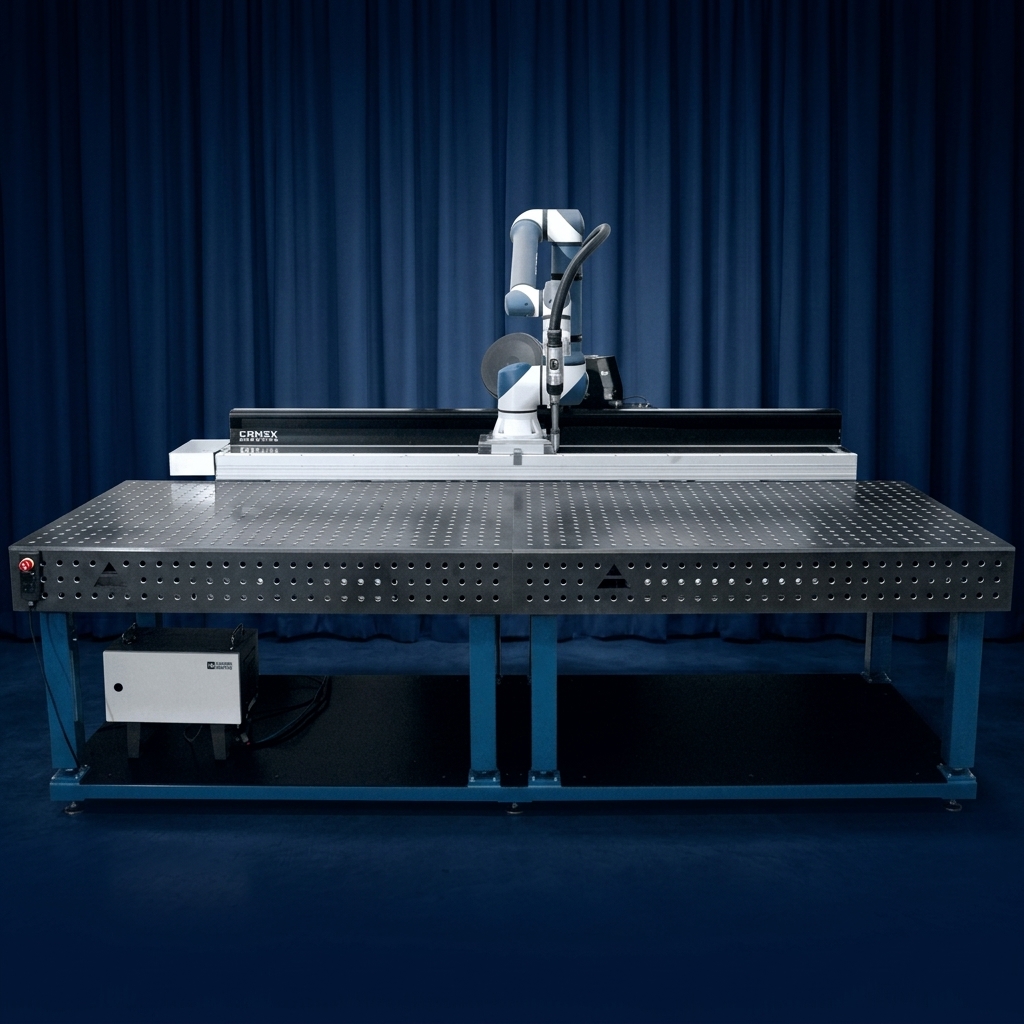
Turnkey MIG welding cobot systems designed for job shops, fabricators, and small-to-medium manufacturers.
Automate repetitive welding, improve bead consistency, and increase arc-on time — without the complexity of a traditional robotic welding cell.
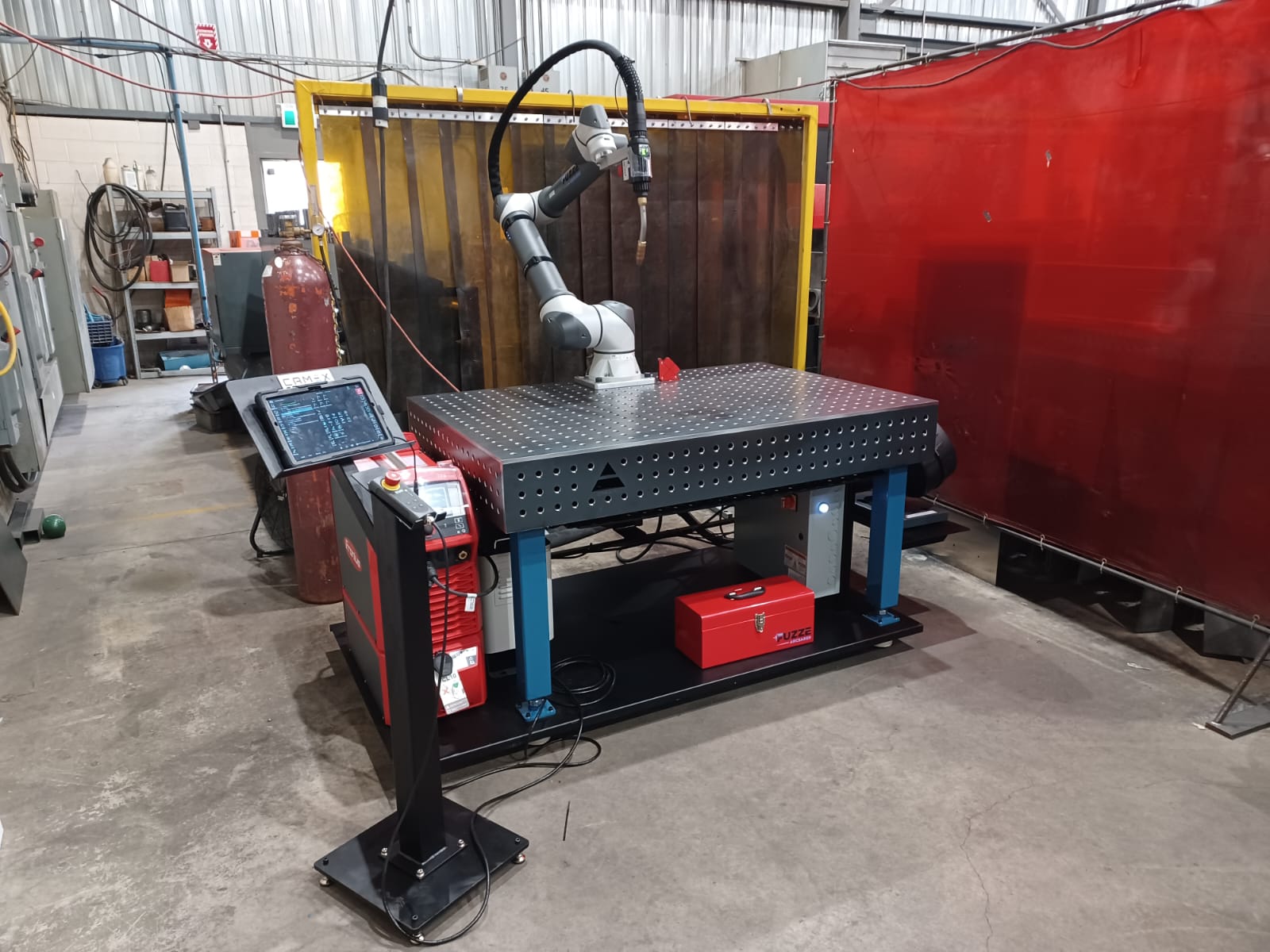
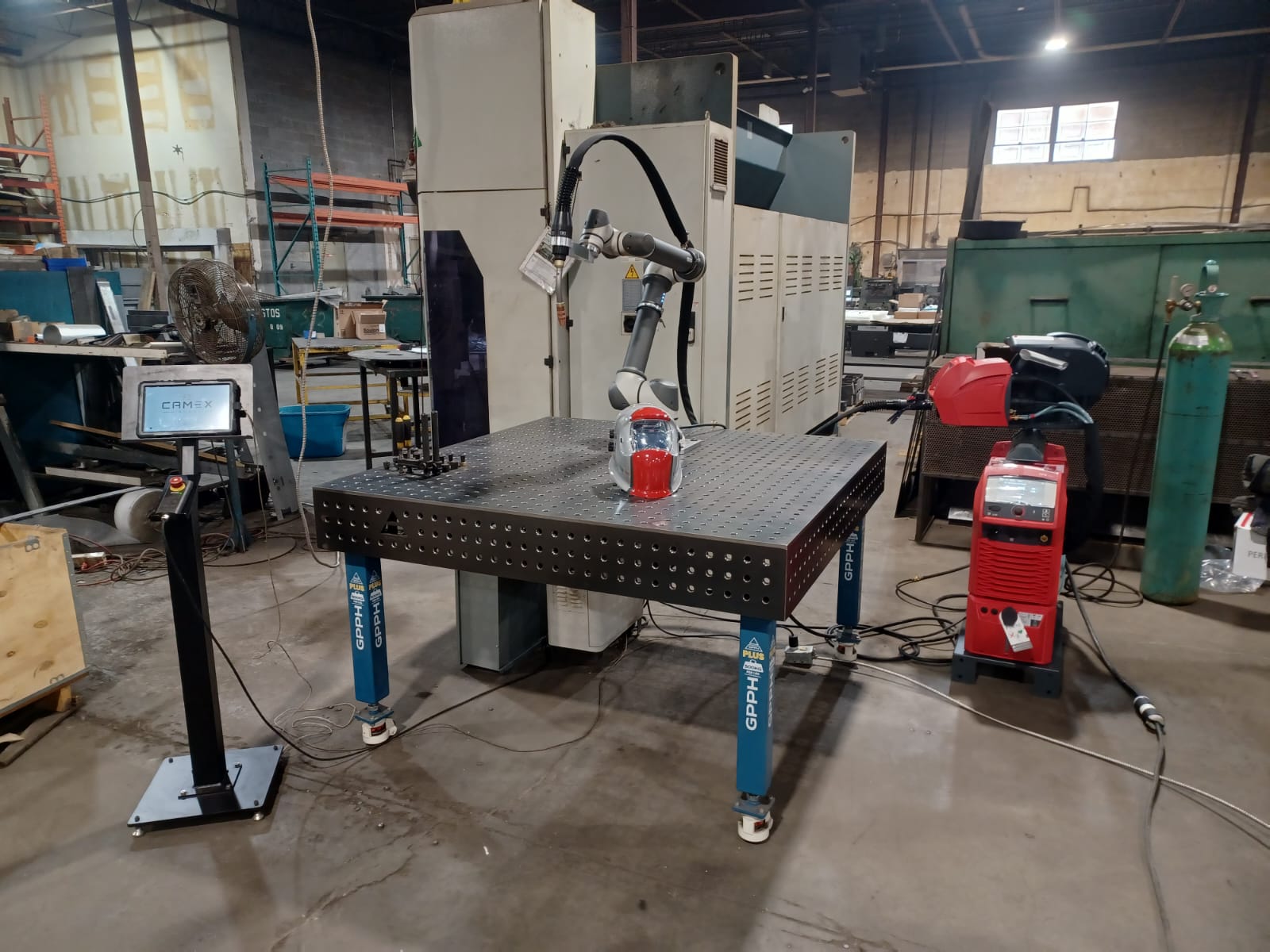
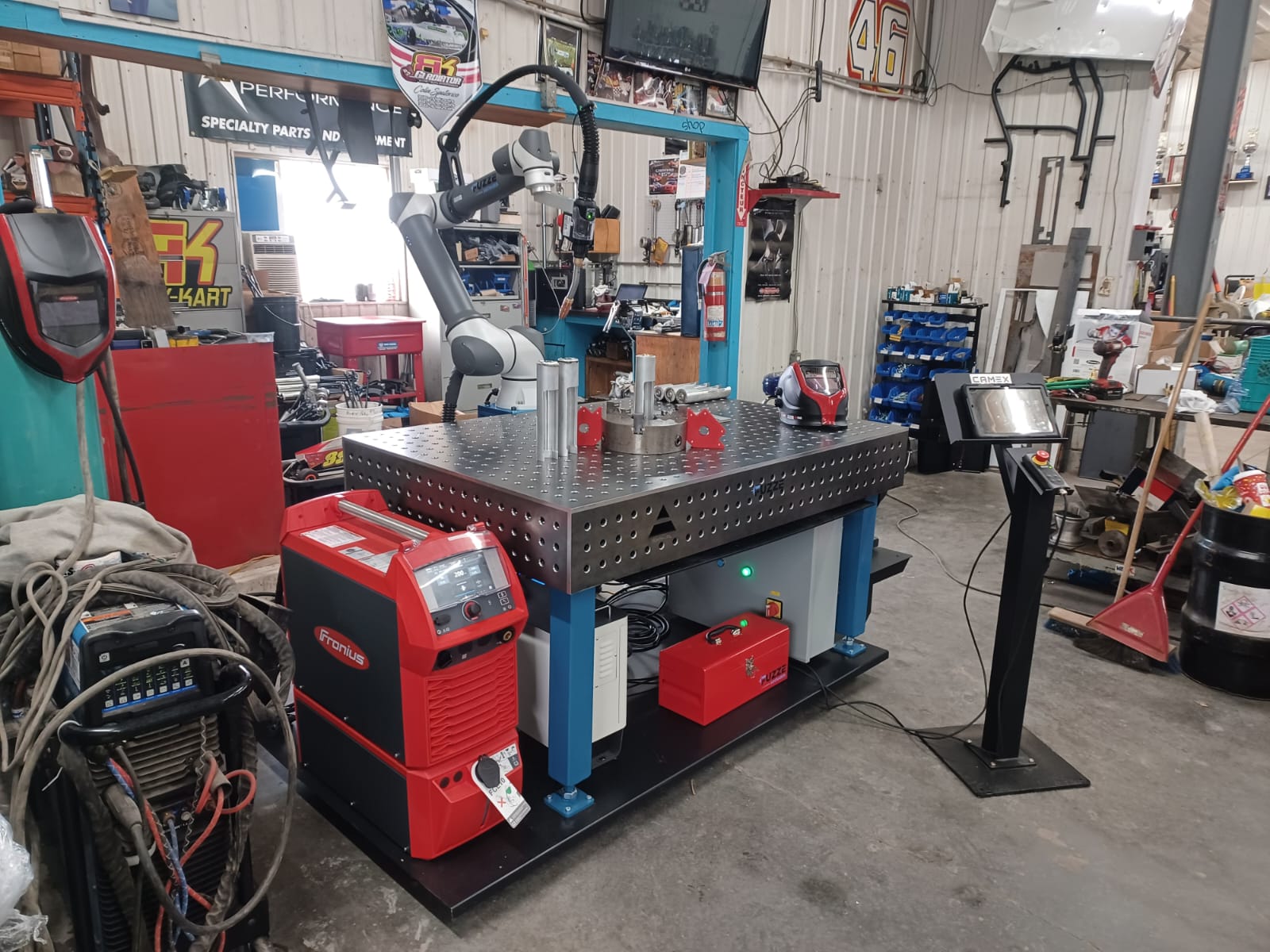
A welding cobot system integrates a collaborative robot arm with a welding power source, robotic torch, and workholding into a complete, application-ready cell. Unlike a robot arm sold as a standalone component, a Camex system includes engineering, programming, training, and support — everything required to automate a welding operation in a production environment.
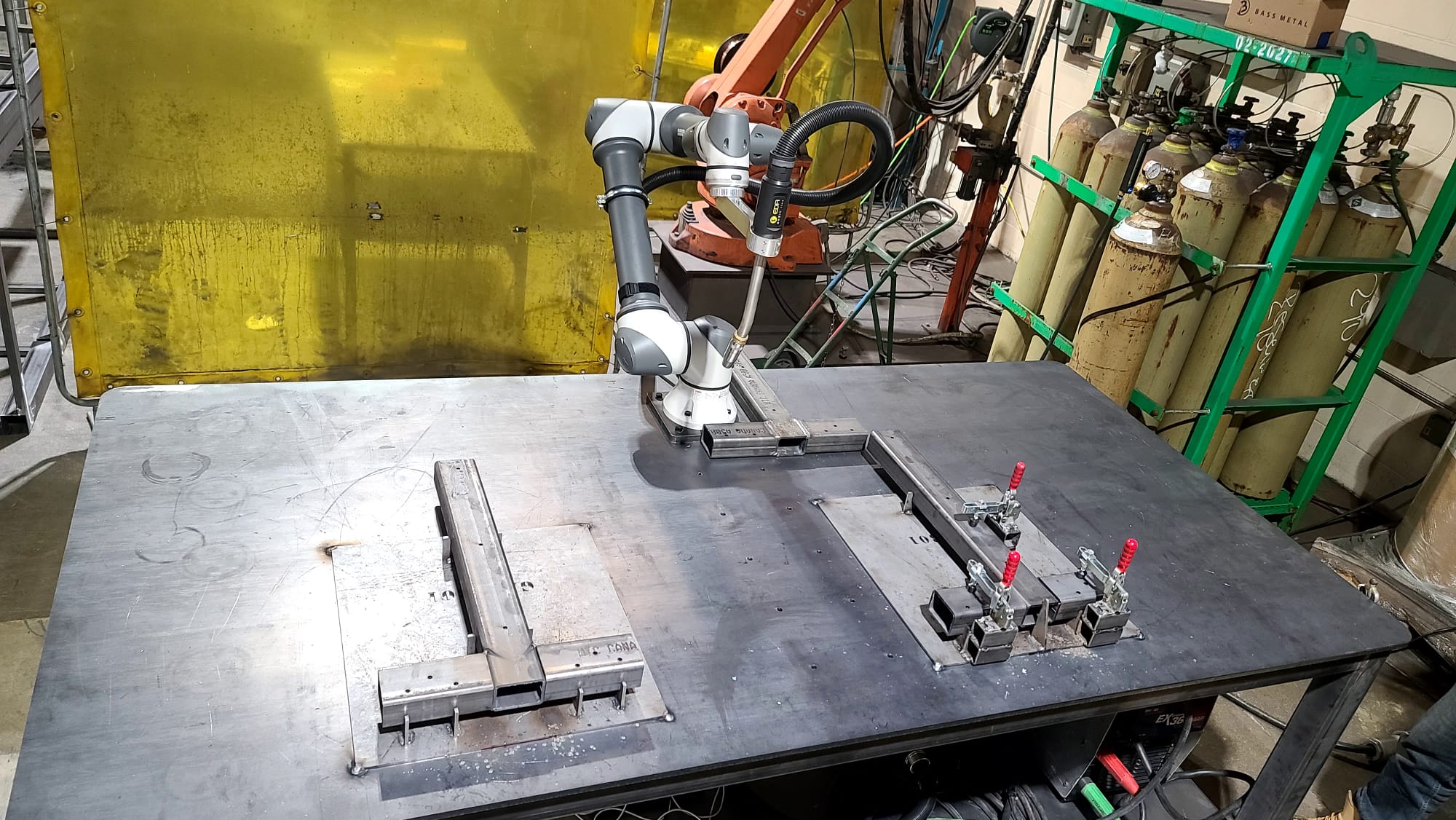
Collaborative robots can automate repetitive programmed weld paths while allowing manufacturers to change between part types more efficiently than many traditional fixed robotic welding systems. The programming interface is designed for welding personnel — operators teach weld start and end points directly, without specialized robotics programming knowledge.
Safety depends on the complete application and an appropriate risk assessment. While collaborative robots incorporate force/torque limiting and speed monitoring technologies, welding applications introduce arc flash, fume, and UV hazards that require specific safeguarding regardless of the robot's collaborative classification. Camex addresses safety integration as part of every system delivered.
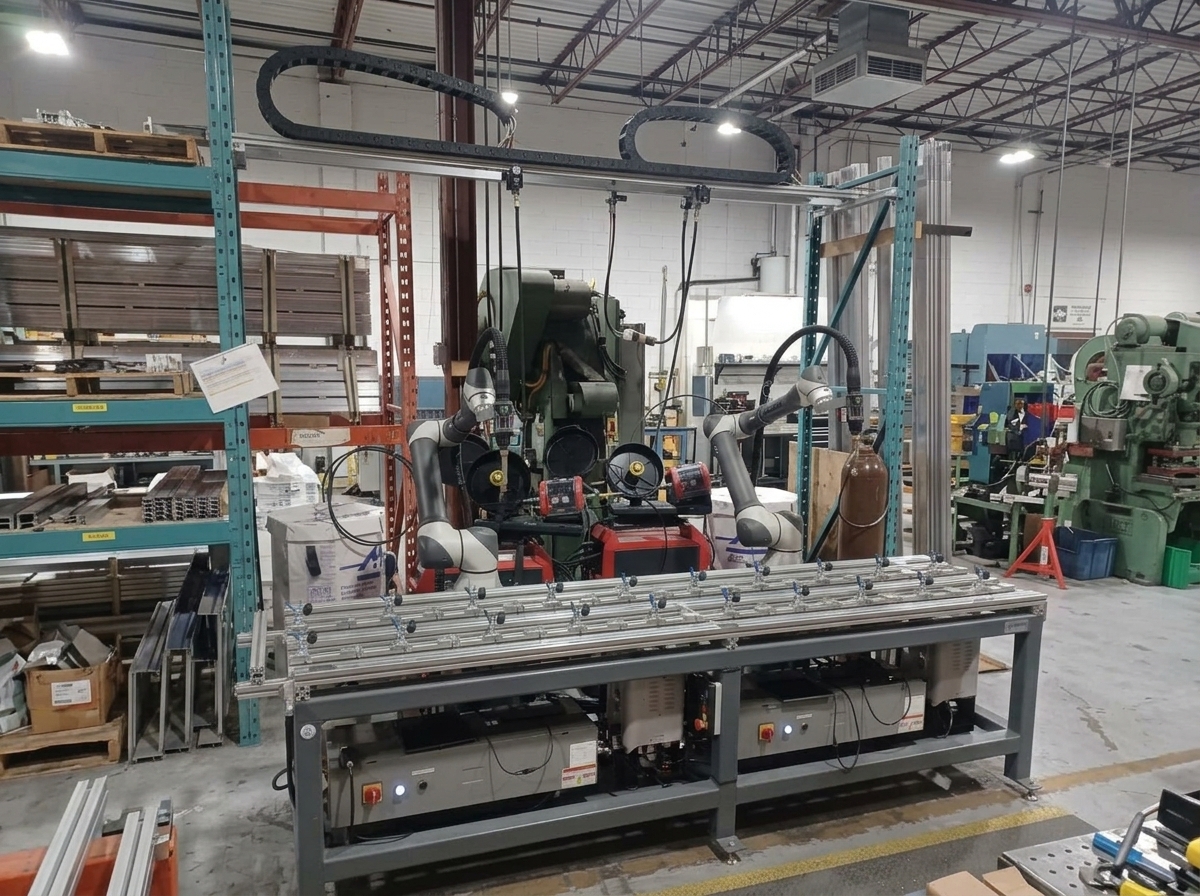
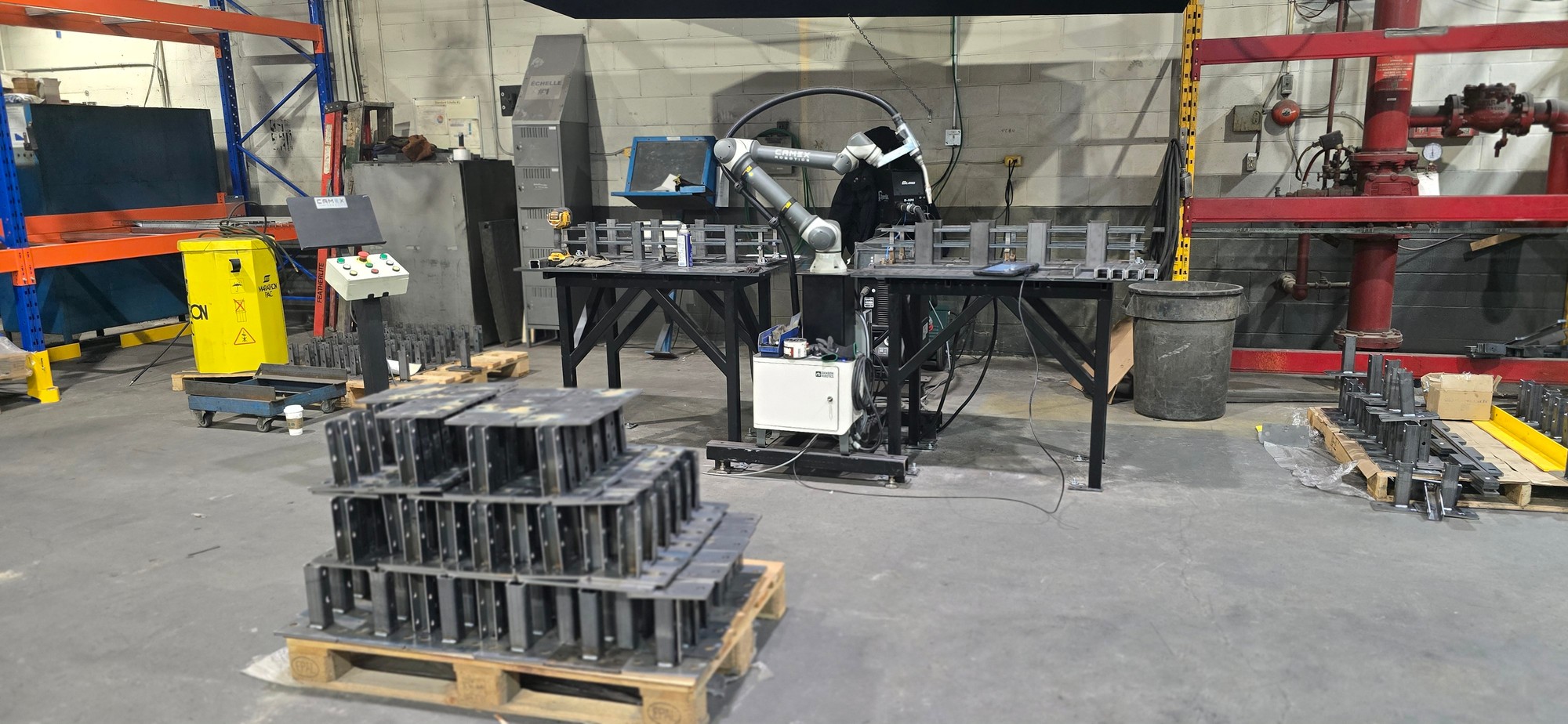
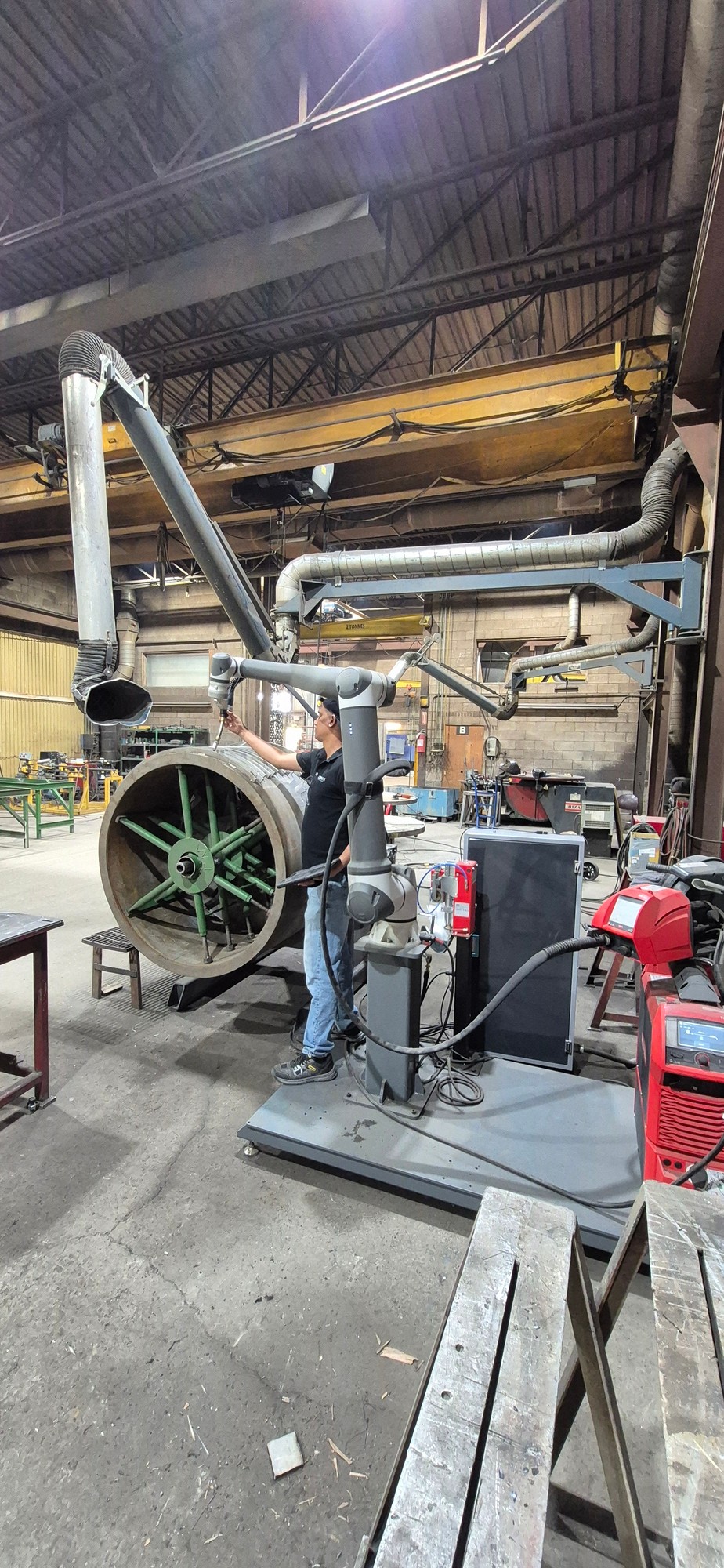
Skilled welders are increasingly hard to find and retain. A welding cobot handles repetitive programmed welds — freeing your certified welders for fit-up, complex joints, and higher-value work.
Manual welders spend a significant portion of their shift on material handling, fit-up, and repositioning — not welding. A welding cobot can increase productive arc-on time by executing programmed weld sequences consistently while operators focus on loading, fit-up and other value-added tasks.
Weld quality varies with operator fatigue, skill level, and torch angle. A programmed cobot places every bead exactly the same way — same travel speed, same torch angle, same wire feed — regardless of who is running the cell.
When the welding station is the constraint in your production line, a cobot can run multiple parts per shift — including unattended during breaks — relieving the bottleneck without adding headcount.
High-mix shops producing multiple part families need automation that changes over quickly. Unlike traditional welding robots, cobot systems allow stored programs to be recalled and parts to be swapped without reprogramming from scratch.
Full robotic welding cells require specialized integrators, significant floor space, and considerable programming expertise. Cobot systems offer a lower barrier to entry — particularly for shops that need flexibility, not just throughput.
Traditional fixed robotic welding cells are optimized for high-volume, single-part production. Most job shops and fabricators don't operate that way — they produce multiple part numbers, smaller batches, and frequently changing work orders.
Camex welding cobot systems are configured for this reality. Programs for different part families are stored in the controller and can be selected quickly. With the right fixturing, a single system can automate welding across a range of different parts throughout the same shift.
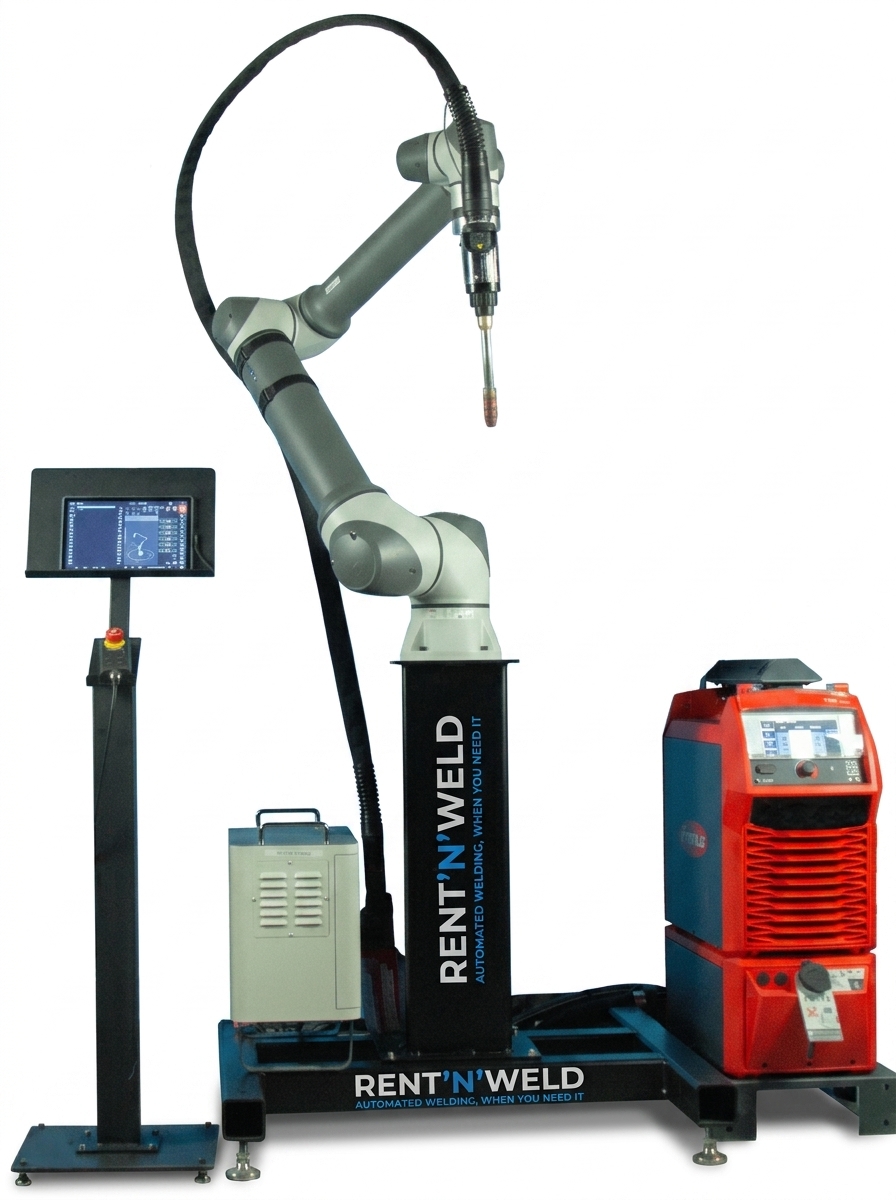
Each configuration is engineered around a specific application profile. Camex will recommend the format that fits your parts, floor space, and production volume.
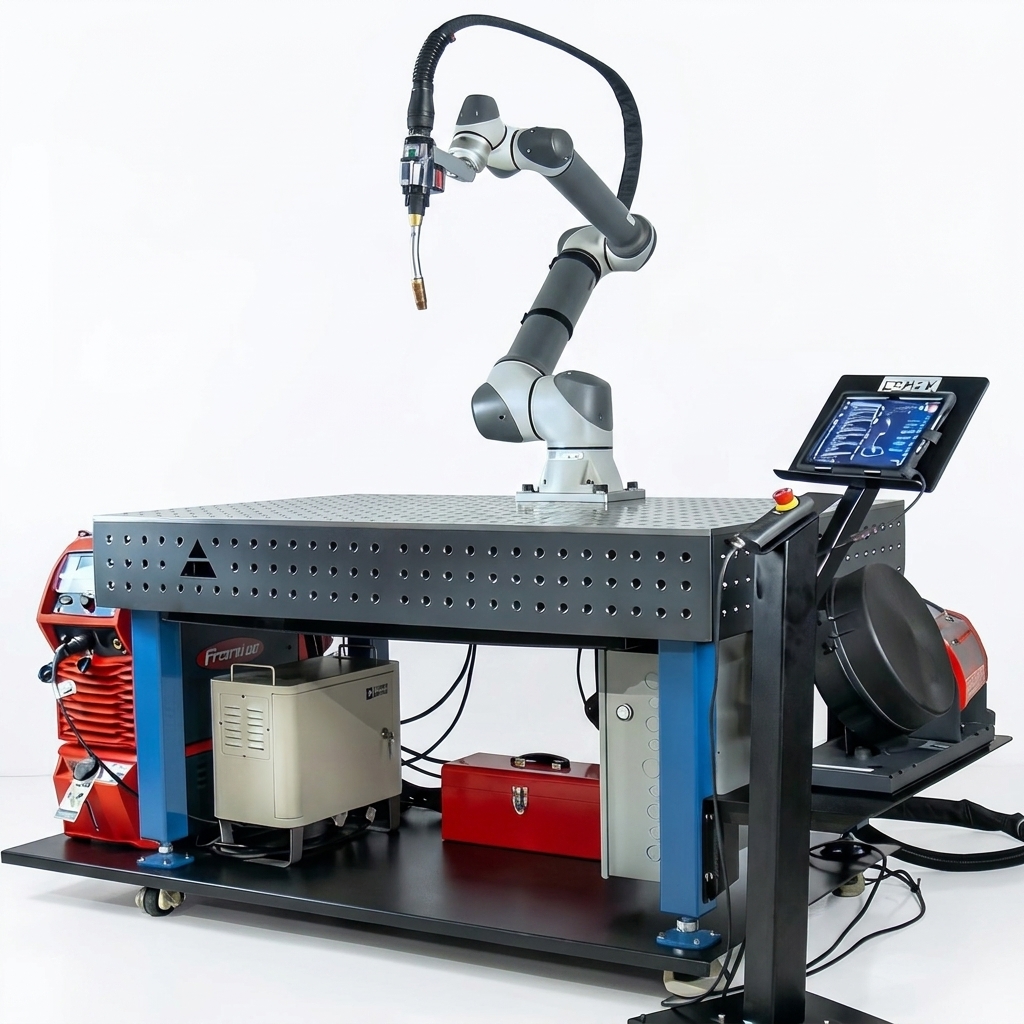 Most Popular
Engineered to handle even the most demanding welds. Equipped with Fronius TPSi or Miller robotic welding technology, it keeps production efficient and output consistent. Easily customized with indexers and larger tables. Ideal for carbon steel, stainless steel, and aluminum.
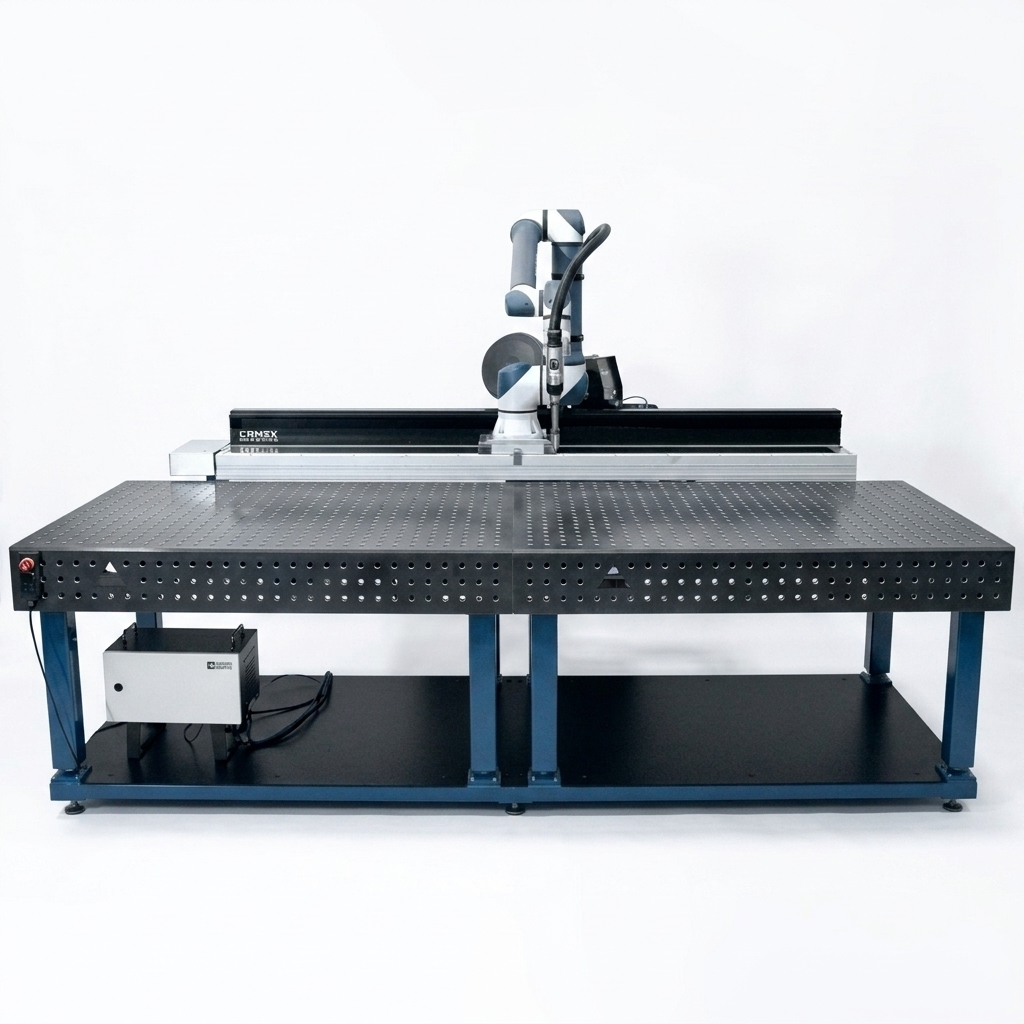 High Volume
Extends reach along a linear axis for large or elongated weldments. Perfect for structural parts, frames, pressure vessels, and assemblies that exceed a single cobot's reach. Horizontal indexers are available as an optional add-on for multi-axis work.
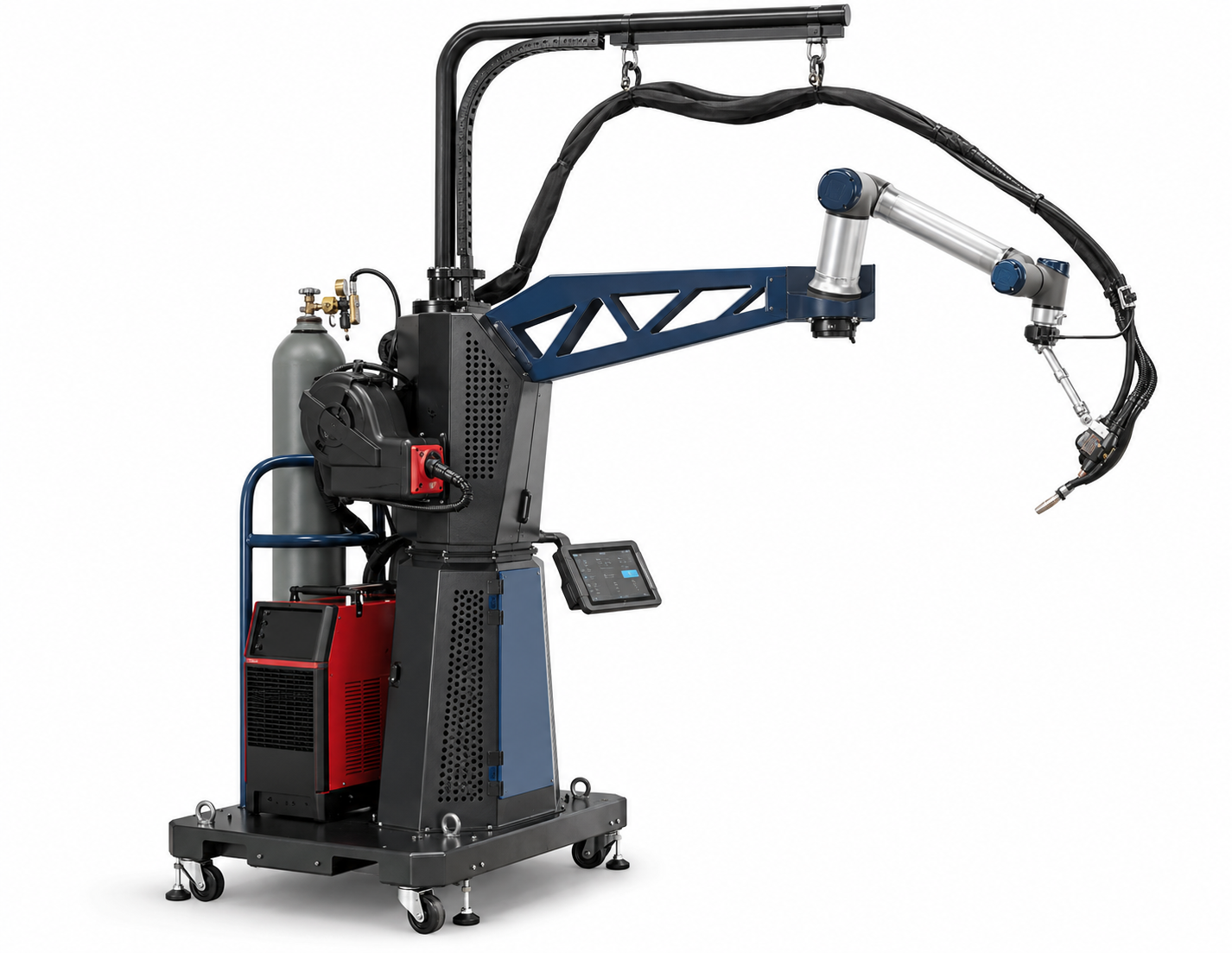 Coming SoonMobil & Flexible
A mobile welding cobot platform designed for flexible deployment between work areas. Mobil System makes it easier to position automation around changing jobs and production needs. Coming soon.
Camex offers a rental option for manufacturers who want to deploy welding automation without purchasing the complete system upfront. Delivery, installation, and operator training are included. Contact us to discuss rental availability and terms for your application.
Adding a positioner or track to a welding cobot system isn't just about increasing robot reach — it changes what the system can weld and how well it welds it. By rotating or tilting the workpiece, positioners present joints at better angles, reduce out-of-position welding, and improve bead quality and penetration on multi-sided assemblies. Tracks extend the working envelope for long structural components.
Rotate the workpiece to present weld joints at the optimal angle. Reduce out-of-position welding and improve bead quality on multi-sided assemblies.
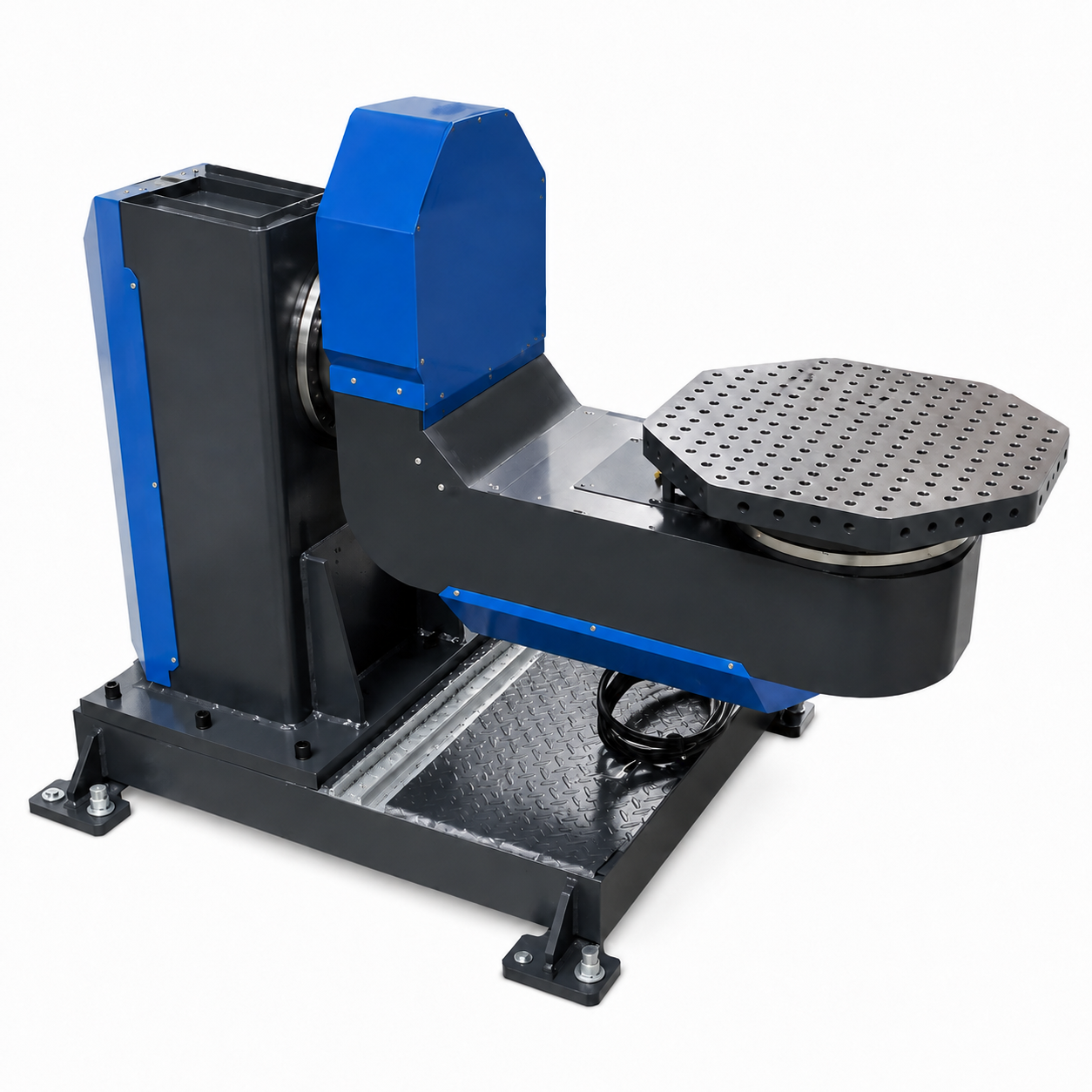
Tilt and rotate the workpiece independently — keeping joints in the flat or horizontal position throughout the weld cycle for better fusion and bead appearance.
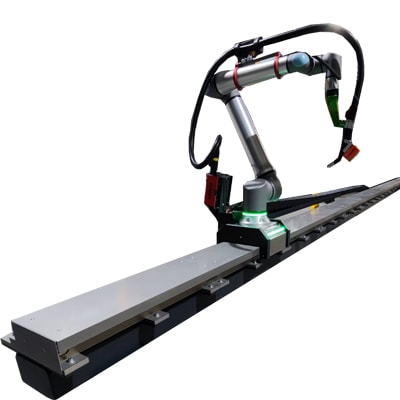
Extend the cobot's working envelope along a horizontal axis. Ideal for structural sections, long frames, pressure vessels, and assemblies beyond a single cobot's reach.
The welding power source isn't an afterthought — it's an engineered component of the complete system. Camex integrates Fronius and Miller robotic welding equipment, selected based on material type, welding process, and production requirements.
Robot and welding source communication is integrated through the cobot controller — parameters including wire feed, current, voltage, and arc start/stop are managed as part of the welding program, not as separate manual settings.
Fronius and Miller are independent brands. Camex is not an exclusive dealer of either. Equipment is selected based on application requirements.
Camex systems use a simplified welding programming interface built for welding shops — not robotics engineers. The interface centers on the welding workflow: selecting a job, teaching weld points, entering parameters, and saving the program.
Operators with welding experience can learn the programming workflow. The objective is to reduce the programming barrier so that a qualified shop person — not an outside specialist — can create and modify programs as production requirements change.
Cobots are not universally better — they suit specific production profiles. Camex can help determine which approach makes sense for your application.
| Criterion | Welding Cobot | Traditional Welding Robot |
|---|---|---|
| Programming | Generally easier to program for high-mix production and frequent job changes | Typically requires more specialized robot programming and integration expertise |
| Changeovers | Well suited to frequent part changes | Excellent for repetitive, high-volume production |
| Footprint | Generally more compact | Often larger cell with perimeter guarding |
| Production volume | High-mix / low-to-medium volume | Medium-to-high volume continuous production |
| Flexibility | High — reconfigurable between jobs | Application-dependent |
| Arc speed | Application-dependent | Often higher for fixed, repetitive welds |
| Safety | Requires application risk assessment | Requires engineered perimeter safeguarding |
| Capital cost | Generally lower entry point | Higher initial cell investment |
Application, part mix, volumes, and production targets all influence the right choice. If you're unsure, contact Camex for an honest assessment of which approach suits your operation.
These are representative applications Camex has integrated or evaluated. Parts with consistent geometry, repeating weld joints, and accessible fixturing points are generally strong candidates.
The best way to evaluate automation feasibility is to share your part with us. Useful information includes:
Every shop is different — that's why Camex welding cobot systems are fully configurable. Pick the cobot arm, welding machine, table size, fixture system, and torch type that fit your workflow and production volume.
Build Your Welding Cobot NowThe ROI on a welding cobot system depends on a range of application-specific variables. Rather than citing a generic payback period, Camex builds a project-specific estimate based on your actual operation.
The primary driver in most cases is labor: arc-on time, number of shifts, current welding labor cost, and the value of freeing skilled welders for more complex work. Secondary factors include rework reduction, scrap, and production bottleneck relief.
Every system follows a structured delivery process. No surprises, no shortcuts.
We evaluate your parts, weld joints, material types, and production volumes. We'll give you an honest assessment of what automation can realistically achieve.
Our welding team reviews part geometry, joint access, fit-up tolerances, and weld size requirements before any system is proposed.
Based on your parts and floor space, we recommend the right system format — table, track, positioner, or combination.
We review or design workholding to ensure consistent part positioning. Good fixturing is the foundation of repeatable automated welding.
System layout, safety integration, torch selection, welding parameter development, and BOM are finalized before fabrication begins.
The system is assembled and integrated at our facility using the robot, welding source, table or track, and safety components selected for your application.
We test on representative parts before the system ships. Welding parameters are dialed in and programs are saved to the controller.
Our team installs on-site, including robot, welding equipment, safety integration, and any external axes.
We verify the system in your facility against your parts — making final adjustments to programs, fixtures, and parameters.
Operators receive hands-on training covering system operation, programming, welding workflow, consumables and routine maintenance.
Technical support, preventive maintenance, program updates, and on-site service are available after go-live from our Quebec and Ontario teams.
Share a drawing, photo, material, weld size, and annual quantity — our welding application team will assess automation feasibility and build you a system recommendation and ROI estimate.